Born and raised in Ibiza, Bruno Roth carries the island’s musical DNA into every set, blending disco, funk and deep house with the kind of instinct that only comes from growing up immersed in club culture. We caught up with the Cas Gayati founder to discuss his influences, the island, and his stunning new EP.
Welcome Bruno. To start broadly, how would you define what the label stands for, what you’re building on the island, and how your releases fit into that wider vision?
Cas Gayatí is something made by an Ibicenco for the Ibicencos – a place of cult and musicality. Every release always involves something or someone from Ibiza, and we’re trying to push a quality sound coming from the island. Not only Balearic, not only mainstream, because it seems those are the only two things people think Ibiza has to offer. There hasn’t really been a record label or DJ from the island that has become something truly significant through their own music in the last 50 years of Ibiza’s history, so we need to find people we can relate to and feel represented by.
Your project feels deeply rooted in family, both visually and musically. How does working with your aunt’s artwork and your father’s writing shape the emotional identity of Cas Gayati?
For me, working with them fills me with joy. They both passed their 60s a long time ago, and these kinds of projects bring life into them. My auntie had these amazing paintings hanging in her house for the last two decades, and my father has been writing poems his whole life. They felt part of this from the beginning. My father was raised by a musician father, and my auntie was an art and music teacher. They just want me to succeed, and when I bring them into the mix, it’s mainly for that smile – apart from the fact that they’re both extremely talented people.
You come from a lineage that traces back over ten generations in Ibiza, with your grandfather releasing one of the island’s first vinyl records in 1962. How does that legacy influence the way you approach music today, both creatively and philosophically?
Apart from achieving this, my grandfather was also a very loved person in Ibiza. He worked very hard to protect the heritage and the local families of Ibiza from foreign investment. For me, this legacy is the biggest inspiration one can have. He showed through his skills what a musician can do, but he also demonstrated that musicians can unify people and become something bigger, both culturally and in business. There are very few spots here for the amount of people who consider themselves locals or Ibicencos, so this creates competition, and most of the time it’s not really about talent, if not all of the time.
Having been introduced to music through the conservatory at such a young age, and later growing up immersed in vinyl culture, how have those early experiences informed your relationship with sound and your approach to production?
The conservatory came very early for me, and I only completed the basic four years, but it was the introduction to another world – my new world called music. From then on, I started to understand how music was made, what I needed to play music, and most importantly, how I could fulfil this desire to create something that people would enjoy in the same way they enjoyed my grandfather’s music – music that we sang and danced to over and over again.
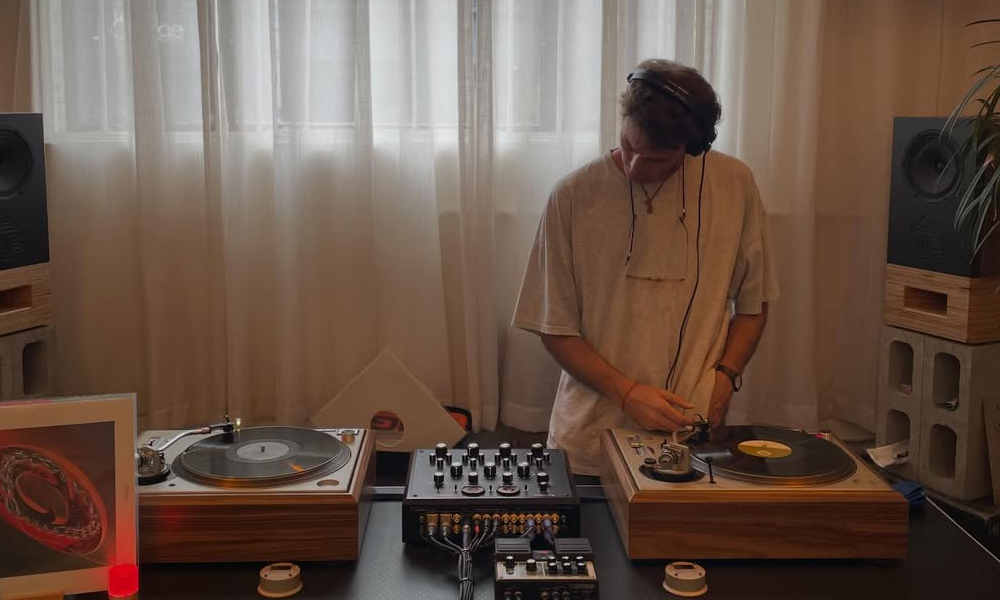
You’ve built a substantial archive of house records spanning nearly three decades. In what ways does that collection act as a reference point when shaping your own productions and sonic identity?
My vinyl collection comes from the decades where I loved music the most – the ’80s, ’90s and early 2000s. It was a time when people still gathered together to make music. Not just four guys with no real musical knowledge throwing random ideas around, but actual musicians, technicians and engineers all working together in the same room. The ideas were thoughtful and driven by something bigger than simply making a record. It was about creating new melodies, new grooves, and new ways of making original music. Nowadays, that’s something very rare and very expensive to achieve.
You’ve spoken about Ibizan artists being historically underrated. What do you feel is missing from the current narrative around Ibiza’s music scene, and how are you actively working to reshape that through your platform and community?
When I say historically underrated, I mean there haven’t really been any major musical representatives from Ibiza in the last 50 years. We have people who know about DJ culture, but not necessarily about music itself, and somehow that has become our worldwide representation. Most of them also had big foreign DJs or managers behind them. I would love to change that. I would love to see an Ibizan manager becoming world-class, or an Ibizan musical director, club owner, or artist becoming something truly significant on an international level, but that has never really happened.
We preferred to put “Ibiza” next to everyone’s name instead of making it something truly special. Everybody makes money around the Ibiza brand except the Ibizans themselves. That’s something quite unique compared to most other places in the world. I’m trying to change that, but first I need to build something like a Ninja Tune or a K7 Records from Ibiza, so people can really see the level of talent the island has.
This new EP brings together a unique collaboration between yourself, your father, and Rosbeh. What dynamics emerged from blending family storytelling with Rosbeh’s more contemporary, jazz-leaning electronic sound?
Rosbeh is a very delicate artist. He has a deep and warm sound, and he’s a huge Bonobo fan, which you can definitely feel in our collaboration. We started this project five years ago when we performed our first live set together and began playing some gigs here and there around Ibiza. The tracks “Bueno” and “Al Padre” were made almost four years ago now, so we just needed something extra to complete the EP, and we decided “Movimiento” was the right fit.
We feel there’s a track for every mood and moment, and you can really hear both the originality and the jazz influences throughout the record. Rosbeh is a very good friend of mine and also close to my family, and my father, apart from being excited that this was his first project, was also very happy for all of us to create something together.
Across tracks like ‘Movimiento’, ‘Al Padre’ and ‘Bueno’, there’s a balance between introspection and dancefloor energy. How do you approach storytelling within club music, and what do you ultimately want listeners to take from these releases?
These releases contain a lot of storytelling within each track. Every piece was made with intention and with a clear message behind it. I just want people to have their own personal moment when listening to them. If you miss your father, maybe you’ll choose “Al Padre”. If you want something that makes you feel like dreaming, maybe you’ll choose “Movimiento”. If you want to immerse yourself in club storytelling, then maybe “Bueno” is the one for you.